 GMP Certified

Healthy Recipes & Nutrition
Creatine for Women: Benefits, Evidence and Practical Advice
Learn what creatine can do for women, from strength and water weight to menopause, plus evidence limits and pregnancy and breastfeeding cautions.
Quick answer
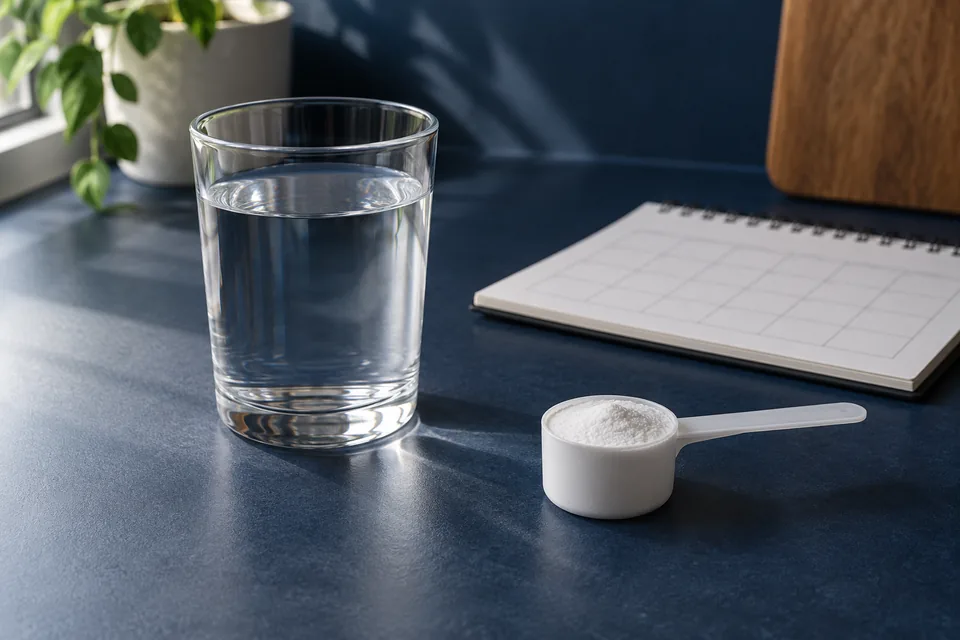
Creatine can help women get more from resistance training, but the benefits are less precisely established than marketing often suggests. Studies in women report some improvements in strength and lean mass; other trials find no additional strength benefit. Creatine monohydrate is the best-studied form, and a women-specific formula is not necessary. Evidence does not establish creatine as a hormone-balancing supplement, a fat-loss treatment, or a routine pregnancy supplement. Women's training trial, postmenopausal trial
The most useful question is what you want it to help with. Supporting a lifting program has a different evidence base from treating brain fog, changing your menstrual cycle, or protecting your bones.
On this page
What does creatine do for women?
Creatine is a compound your body makes and obtains from foods such as meat and fish. In muscle, it helps replenish ATP, the immediate energy source for contraction. Supplementation can increase the supply available for repeated, demanding efforts, such as lifting sets or short sprints. Women use this energy system too. NIH explanation
That mechanism explains why creatine is studied alongside training. It does not tell us how much a particular woman will improve, whether she will notice a difference, or whether every other advertised benefit is real.
A general claim that “creatine works” can conceal important differences between studies. A trial in young men, a small study of active women, and a two-year study after menopause answer different questions. Age, training experience, the exercise program, and the outcome measured all matter. Read the population as carefully as the headline.
What are the creatine benefits for women who lift?
There is direct research in women, not only evidence borrowed from men. In a placebo-controlled study of 19 young women, creatine combined with ten weeks of resistance training produced greater improvements in maximal strength, intermittent exercise capacity, and fat-free mass than placebo. This supports a possible training benefit, but 19 participants cannot provide a reliable forecast for all women. Vandenberghe et al., 1997
The same study is sometimes quoted using dramatic percentages. Those figures describe differences in the improvements observed during that particular program. They should not become a promise that you will be a certain percentage stronger after buying creatine.
It also helps to distinguish the outcomes:
- Strength is what you can produce in a particular test or exercise.
- Fat-free or lean mass includes water as well as muscle and other tissues.
- Muscle growth is a more specific change than either a higher scale reading or a higher lean-mass estimate.
For someone already following a progressive program, creatine may be a useful addition. Keep the program, exercise technique, and logging method reasonably consistent if you want to judge progress. Record loads, repetitions, and how demanding the sets feel. A better session after starting a supplement does not isolate its effect from sleep, practice, motivation, or a change in programming.
The absence of a noticeable “kick” is not a reason to increase the amount. Creatine's exercise role concerns stored fuel availability rather than a stimulant-like sensation. Nor should a supplement purchase take priority over learning the movements and building a routine you can maintain.
Does creatine help after menopause?
Research after menopause is especially relevant because it tests women directly over a different stage of life. It also shows why muscle, physical function, and bone claims should be evaluated separately.
A two-year randomized trial enrolled 237 postmenopausal women, with an average age of 59. Participants received creatine or placebo alongside resistance training and walking. Creatine did not improve bone mineral density at the femoral neck, total hip, or lumbar spine compared with placebo. It also did not add to the measured bench-press or hack-squat strength gains. Chilibeck et al., 2023
Walking time and some hip-bone geometry measures improved. More lean tissue was found in an analysis of valid completers. Adherence was relatively low and attrition was high, so interpretation needs care. These findings do not prove fracture prevention.
The practical conclusion is narrower than “creatine fixes menopause.” It may have a place in a training plan, but it should not replace osteoporosis assessment or prescribed treatment. The women in this study were postmenopausal; the findings also should not be relabeled as proof that creatine treats perimenopausal symptoms.
Will creatine make women gain weight or look bulky?
Scale weight can change with creatine, but a higher reading does not identify what changed. Water, muscle, and fat are different components. A rapid increase cannot be counted as an equal amount of new muscle or body fat.
Women-specific fluid research adds useful nuance. In a randomized study of 30 moderately active women, five days of creatine loading increased measured body-water compartments during the luteal phase, but the researchers did not find a significant between-group difference in body-weight change across the menstrual cycle. The study included naturally menstruating women and hormonal-contraceptive users. Moore et al., 2023
That finding does not establish that women never gain weight with creatine. It shows that fluid measurements and scale readings do not always move together, particularly in a small, short experiment. Avoid promises that every woman will gain a fixed number of pounds or that every woman will remain exactly the same weight.
“Bulky” is a personal description, not a research outcome. Choose goals you can actually assess: improving a lift, maintaining a comfortable routine, or changing body measurements over time. If you track weight, compare readings under similar conditions and look at the pattern rather than reacting to a single morning. Recording cycle timing may help you interpret your own pattern without assuming every fluctuation came from the supplement.
Creatine should not be sold as a shortcut to a smaller waist or guaranteed fat loss. For the broader distinction between water, muscle, and fat, see does creatine make you gain weight?
Does the menstrual cycle change the advice?
Menstrual-cycle research is still too limited to justify a precise supplement calendar for everyone.
A 2023 study analyzed 39 women and tested short-term creatine loading across menstrual phases. It found a favorable interaction for a repeated-sprint fatigue measure, but no improvement in the heart-rate-variability measures used to assess recovery. Several sprint outcomes also did not show significant supplement effects. The participants included women with natural cycles and different forms of contraception. Gordon et al., 2023
This is an interesting research signal, not a demonstrated reason to start and stop creatine on particular cycle days. The small sample and short supplementation periods limit how confidently the result can guide a long-term routine.
It also does not establish that creatine balances estrogen or progesterone, improves fertility, treats premenstrual symptoms, or makes contraception more or less effective. Those are separate questions requiring their own evidence. Do not change contraception or ignore new cycle changes because of a fitness-supplement claim.
What about brain fog and mood?
A potential role in brain energy metabolism has encouraged research, but it has also encouraged broad promises that go beyond the results.
In a randomized crossover trial involving 123 participants, researchers compared six weeks of creatine with six weeks of placebo. The main conventional statistical tests did not show significant benefits on the primary cognitive measures; the overall findings were compatible with small, uncertain effects. This was not a trial designed to establish treatment for menopausal brain fog. Sandkühler et al., 2023
An exercise supplement is therefore a poor substitute for assessing persistent difficulty concentrating, low mood, or unusual fatigue. This article does not recommend creatine to treat depression or replace medication, and a possible cognitive effect should not be presented as an established women-specific benefit. If those symptoms are why you are considering it, discuss the symptoms themselves with a clinician rather than choosing a product first.
Do women need a different creatine or dose?
There is no need to begin with a product marketed specifically to women. Creatine monohydrate has the largest research base. Packaging, flavor, added vitamins, or a “female formula” label do not establish a superior effect. Our comparison of creatine forms explains the main differences.
Common adult protocols use 3–5 g daily as a maintenance amount. Loading can raise stores more quickly, but a lower daily amount taken over several weeks is another established approach. These are general research protocols, not an individualized prescription or evidence of a uniquely optimal dose for every woman. NIH protocol summary
When comparing products, check:
- The named creatine form.
- The actual creatine amount per serving, not just the total powder weight.
- The complete ingredient list, especially in blends.
- Whether any claimed independent certification can be verified for that product.
Do not copy a higher research dose simply because the participants were women. Different trials choose different amounts for different questions, often with screening and monitoring that a consumer does not have. More is not a useful default, and discomfort is not a sign that a supplement is working.
When should women get medical advice first?
Pregnancy and trying to conceive
Do not start creatine during pregnancy on the strength of a gym recommendation. Human supplementation evidence remains limited, and reassuring findings in nonpregnant adults do not establish fetal or maternal safety. Animal experiments and observational studies of dietary creatine cannot settle that question. If you are pregnant or planning pregnancy, discuss any proposed supplement with your maternity-care clinician. Pregnancy evidence discussion
Breastfeeding
Creatine naturally occurs in breast milk, but that does not demonstrate the safety of taking extra creatine. LactMed reports that milk levels after supplementation have not been measured in humans and that relevant infant-effect data are unavailable. It advises avoiding supplementation unless prescribed by a healthcare professional while evidence remains limited. LactMed
Kidney disease, medication and symptoms
If you have kidney disease or are at risk of kidney problems, ask your healthcare team before using creatine. Bring the complete product label and mention other medicines and supplements. NCCIH recommends professional assessment and monitoring for people at risk of kidney problems. NCCIH guidance
Tell the clinician you use creatine when having blood tests. Creatinine, a marker used to estimate kidney function, can be affected by supplementation; an abnormal result needs interpretation rather than automatic reassurance. Kidney-testing discussion
Stop using a product that causes recurring symptoms and seek advice. Persistent diarrhea, significant pain, or other new symptoms should not be normalized as an adjustment period. Our creatine side-effects guide separates common concerns from signs needing assessment. This article concerns adults and should not be used as a supplement plan for children or teenagers.
Should women take creatine?
Some women may find it useful; none needs to take it simply because it is popular.
A reasonable decision starts with three questions: Do I have a training goal it could plausibly support? Have I addressed any health or life-stage reasons for caution? Can I evaluate progress without turning every scale fluctuation into a verdict?
If your goal is better performance in a consistent resistance-training program, creatine is worth considering with realistic expectations. If your main concern is unexplained fatigue, mood, fertility, or menopause symptoms, a supplement guide cannot replace an assessment of that concern.
The takeaway
The case for creatine for women is strongest as a possible addition to resistance training. Women-specific studies are valuable, but their results are mixed and do not support promises about hormones, fat loss, or universal benefits after menopause. Choose a clear goal, distinguish water changes from muscle growth, and give pregnancy, breastfeeding, and kidney health their own consideration.
Sources and disclosure
- NIH Office of Dietary Supplements. Exercise and athletic performance fact sheet.
- Vandenberghe K, et al. Long-term creatine intake during resistance training. 1997.
- Chilibeck PD, et al. Two-year trial in postmenopausal women. 2023.
- Moore SR, et al. Fluid distribution across menstrual phases. 2023.
- Gordon AN, et al. Exercise recovery across the menstrual cycle. 2023.
- Sandkühler JF, et al. Randomized cognitive-performance trial. 2023.
- Longobardi I, et al. Review of creatine safety concerns. 2025.
- LactMed. Creatine and breastfeeding. Revised July 15, 2025.
- NCCIH. Bodybuilding and performance-enhancement supplements.
BalkanFitness sells supplements, including creatine. This article is general education, not personalized medical advice or an evaluation of a particular product.
© 2026 Balkan Pharmaceuticals. All rights reserved.

