SUPPLEMENT GUIDE
Creatine and Caffeine:Do They Cancel Each Other Out?
Published 2026-10-11 · Updated 2026-10-11
Quick answer: Research does not show that creatine and caffeine universally cancel each other out. Results depend on the study protocol, and combining them is not guaranteed to improve performance. Coffee can be part of a creatine routine, but there is no well-established timing gap that guarantees the best result.
This guide discusses general research in adults, not testing of our product or advice for your individual medical needs.
If you take creatine and enjoy coffee, the useful question is whether your routine needs to change. The research is more nuanced than either “never combine them” or “the perfect stack.” Here is what the studies can tell you, what they cannot, and how to make a practical decision.
What the research actually says
Where the cancellation claim started
A 1996 study in nine healthy men helped start the concern. Creatine alone improved knee-extension performance, while creatine plus caffeine did not. Yet muscle phosphocreatine increased in both conditions. This was a specific performance result in a small experiment, not evidence that caffeine prevented creatine from reaching the muscles.
It matters because “caffeine blocks creatine absorption” and “this combination did not improve this test” are different claims. The first is not established by that study. A short trial in nine men also cannot settle what happens in every coffee drinker’s training program.
Later results are mixed
Two systematic reviews, one published in 2022 and another published online in 2021, each examined ten studies. Their study sets overlap; they should not be treated as twenty independent experiments. They found that results vary with how the supplements are used and which performance outcome is measured.
Repeated caffeine use during a short creatine-loading phase produced mixed findings, including some apparent interference. Several trials using a single caffeine dose after creatine loading retained a caffeine-related performance benefit, while others found no added benefit. “Loading” means a short initial period of higher creatine intake used in some studies; it is not a requirement for using creatine.
A 2024 trial in 23 endurance-trained adults illustrates the nuance. Creatine improved a 15-second sprint outcome, and caffeine improved a six-minute time-trial outcome. Combining them did not produce an additive benefit or an attenuating effect in that protocol. It supports a measured conclusion, not a promise that every combination is equivalent.
The key distinction: A result from one loading schedule, sport, or test does not automatically apply to daily maintenance use, a morning coffee, or long-term muscle growth.
Why the study setup changes the answer
Keep the question a study tested separate from the claim you want to make about your own routine.
| Research situation | What was observed | What remains uncertain |
|---|---|---|
| Daily caffeine during loading | Mixed findings; some studies suggest interference | Whether that applies to every dose, routine, or person |
| Caffeine after loading | Benefits retained in several small trials | Whether combining them adds more than either alone |
| Longer-term training | A small six-week study gave limited, mixed results | The effect on muscle growth over months |
| Digestive comfort | Mild discomfort in some participants | Who will tolerate which mixture |
For example, a 2011 crossover study in twelve active men found that caffeine after five days of creatine loading improved some early sprint outcomes compared with creatine plus placebo. The benefit was not universal across every sprint. An improvement in one short exercise test does not establish better results throughout a training program.
Long-term muscle growth is less well resolved. A six-week resistance-training trial with 28 participants split people into four small groups. The study reported a change in knee-extensor thickness that differed by group: thickness increased over time in the creatine-only group, with no change in the other groups. There were no other between-group differences. That limited result cannot establish that caffeine “kills your gains,” or that all long-term routines produce identical results.
Can you put creatine in coffee?
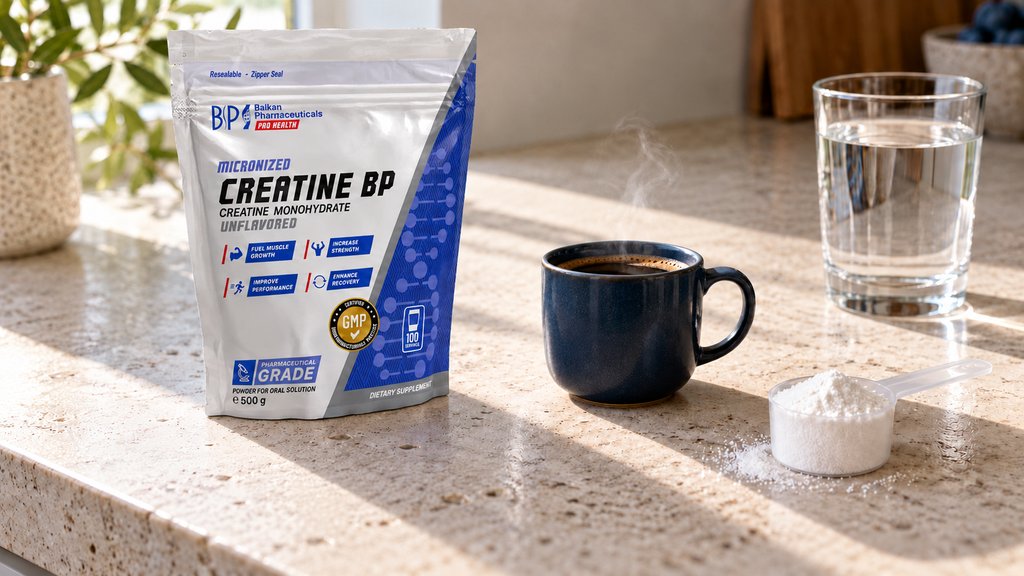
Yes, coffee has been studied as a way to consume creatine. The practical questions are what else is in your drink, how much caffeine you are getting, and whether the combination is comfortable for you.
In a 2016 randomized trial involving 54 men, one group mixed creatine with instant coffee for five days. None of the active supplement groups significantly outperformed placebo. The coffee group did not report gastrointestinal symptoms, but it contained only thirteen participants. That is not proof that coffee is a superior mixing method or that every coffee-and-creatine routine has identical effects.
What about hot coffee?
Laboratory research shows that creatine’s stability after mixing depends on the liquid, acidity, temperature, and time. A 2025 laboratory study included coffee among several drink matrices, but laboratory stress testing is different from measuring exercise performance after a freshly mixed cup. It does not establish a universal temperature cutoff or a “drink within ten minutes” rule.
Follow the product’s preparation and storage directions. Mixing when you are ready to drink, rather than preparing a hot batch for storage, is a reasonable precaution, not a proven performance advantage. Taking creatine separately in water is equally simple. Do not expect hot coffee to improve absorption.
Count the caffeine, not just the cups
Caffeine content varies with the coffee and serving size. Add up all sources, including energy drinks and pre-workout blends. Plain creatine is not caffeine, but a multi-ingredient product may contain both. Check the complete label before combining products.
You do not need to redesign an entire pre-workout stack around this question. Keep the focus on the ingredients you actually use and whether extra caffeine is necessary.
A practical routine without a timing myth
Do not chase a “safe gap”
No reliable separation interval has been established by these studies. Advice to wait exactly one, three, or six hours would sound more certain than the evidence allows. Taking creatine at another meal can be convenient, but it is not a proven workaround for every possible interaction.
Use creatine according to the product directions, and choose caffeine based on your tolerance and schedule. Caffeine that disrupts sleep is a reason to reconsider the amount or timing, regardless of whether you use creatine.
Let digestive comfort guide adjustments
In the 2016 trial, four of thirteen participants taking creatine with caffeine powder reported mild gastrointestinal discomfort; none was reported in the other groups. This is a signal to pay attention to comfort, not a prediction that the combination will upset everyone’s stomach.
If a mixture repeatedly causes discomfort, stop using that mixture and review the amounts and other ingredients rather than pushing through it. Persistent symptoms deserve advice from a healthcare professional. Do not increase caffeine or force extra water to try to compensate for a suspected interaction. In a controlled study of fifty habitual male coffee drinkers, coffee and water produced similar hydration markers over three days. That does not settle every dose or exercise setting, but “coffee dehydrates you and cancels creatine” is too simplistic.
Use adult caffeine guidance carefully
The FDA cites 400 milligrams per day as an amount not generally associated with negative effects for most adults. It is not a goal, a recommended performance dose, or an individual guarantee. Some people need substantially less.
Ask a qualified healthcare professional about caffeine and supplements if you have a relevant medical condition, take medication, are pregnant or trying to become pregnant, or are breastfeeding. This guide is for adults; the adult caffeine number should not be applied to children or teenagers.
Frequently asked questions
Does creatine have caffeine?
Creatine and caffeine are different ingredients. Plain, single-ingredient creatine monohydrate is not a caffeine supplement. A flavored blend or pre-workout can contain both, so read the complete ingredient list and any declared caffeine amount. Do not assume that every product with “creatine” on the front is stimulant-free.
Can you mix creatine with coffee?
Yes, coffee has been studied as a way to take creatine. That does not establish that the combination works identically for everyone or adds extra benefit. Follow your product’s preparation directions, account for the coffee’s caffeine, and choose a separate drink if the mixture does not agree with your stomach.
Can I put creatine in hot coffee?
The studies discussed here do not establish an exact temperature cutoff or a guaranteed time window for hot coffee. Follow the product’s mixing and storage instructions. You can take creatine separately in water if you prefer; it does not have to be mixed into coffee to fit the same daily routine.
How long should I wait between creatine and caffeine?
No reliable separation interval has been established by these studies. A rule to wait one, three, or six hours would imply more certainty than the evidence supports. Using them at different times may be a practical choice for comfort or to keep caffeine away from bedtime, rather than a proven way to prevent interference.
Will caffeine stop me from gaining muscle?
The combination studies do not establish that caffeine stops muscle growth. Much of the research uses short supplementation periods and performance tests, not months of resistance training. A small six-week trial leaves uncertainty, so neither “caffeine kills your gains” nor “the combination is proven identical long term” is justified.
The takeaway
You do not need a universal ban on coffee because you take creatine. Equally, the evidence does not promise that combining them improves results. Keep your routine simple, read the labels, and give comfort and sleep more weight than an invented timing rule.
Check the product before choosing
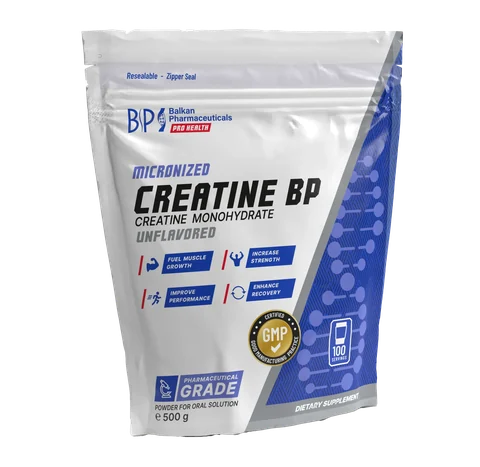
The unflavored variant is shown here. Review the current creatine options, ingredients, and serving directions on BalkanFitness. The studies above did not test this branded product.
References
- Caffeine counteracts the ergogenic action of muscle creatine loading. Journal of Applied Physiology. 1996.
- Interaction Between Caffeine and Creatine When Used as Concurrent Ergogenic Supplements: A Systematic Review. 2022.
- Effects of creatine and caffeine ingestion in combination on exercise performance: A systematic review. Published online 2021.
- Effects of caffeine on intermittent sprint performance after creatine supplementation. 2011.
- Effects of Coffee and Caffeine Anhydrous Intake During Creatine Loading. 2016.
- Effects of Creatine and Caffeine Supplementation During Resistance Training on Body Composition, Strength, Endurance, Rating of Perceived Exertion and Fatigue in Trained Young Adults. 2021.
- No additive effect of creatine, caffeine, and sodium bicarbonate on intense exercise performance in endurance-trained individuals. 2024.
- Laboratory study of creatine stability under different solution conditions. 2009.
- Laboratory study of creatine stability in different liquid matrices. 2025.
- No evidence of dehydration with moderate daily coffee intake: a counterbalanced cross-over study in a free-living population. 2014.
- Spilling the Beans: How Much Caffeine Is Too Much?. U.S. Food and Drug Administration.
Research summaries reflect the populations and protocols studied. This article is general education, not personalized medical advice.